Recessed Lighting Installation in Jersey City & Hudson County, NJ
Recessed lighting installation in Hudson County runs $150–$250 per can for 4" or 6" LED wafer lights in an existing drywall ceiling, and $200–$350 per can where we have to fish wire through plaster and lath in an older rowhouse — a typical 2026 range. A standard room of six to eight fixtures on one dimmer lands at $1,500–$1,800. If the job needs a new circuit, that adds an NJ UCC electrical permit, and we pull it.
By submitting, you agree to receive text messages from Malfettone Electric at the number provided, including those related to your inquiry, follow-ups, and review requests, via automated technology. Consent is not a condition of purchase. Msg & data rates may apply. Reply STOP to cancel or HELP for assistance.
Recessed Lighting Cost in Hudson County — Typical 2026 Range
Prices are what we are quoting in Hudson County in 2026 and include fixtures, labor, and the permit where one applies. Ceiling access, insulation, and existing circuit capacity move the number — which is why you get it in writing first. Full pricing guide →
How Many Lights, and Where — Room by Room
The starting point most electricians use is simple: divide the ceiling height by two to get your spacing. An 8-foot ceiling wants fixtures about 4 feet apart, held roughly 2 to 2.5 feet off the walls. From there the room's job takes over — counters, seating, artwork, and the stair nosing all pull fixtures out of the grid. We mark the ceiling and walk it with you before anything gets cut.
The rule that actually matters in a kitchen is where the light lands, not where the can sits. We set fixtures roughly 24–30 inches off the wall so the beam hits the countertop instead of the cabinet face, then fill the walking space between. Add under-cabinet lighting and you can run the cans dimmer at night.
General ambient light plus two or three aimable fixtures over seating and artwork. A 12x14 living room usually lands at 6 cans. Wall-washing the long wall makes a narrow Hudson County rowhouse parlor read wider than it is.
Fewer cans, warmer color temperature (2700K), always on a dimmer. Four fixtures in a typical bedroom is plenty — recessed light directly over the bed is the most common regret, so we keep it off the pillow line.
A single run down the center of the hall, centered on the walking path rather than the doorways. On stairs we keep fixtures clear of the tread nosing so the light doesn't throw a shadow onto the step edge.
Wet-rated or shower-rated trims are required over a tub or shower, and the circuit is GFCI protected. Vanity light should come from the front, not overhead only, or you get shadows under the eyes.
Wafer lights are the whole reason low-ceiling basements are now easy — they need about half an inch of depth behind the drywall instead of a 7-inch housing, so joists and ductwork stop dictating the layout.
LED Wafer or a Real Can Housing?
LED wafer (canless)
A disc under an inch thick with a small remote junction box that tucks up into the ceiling cavity. It fits where a housing physically cannot — shallow joist bays, around ductwork, under the floor above, in a low basement. Most are air-tight and IC-rated, so they can sit in contact with insulation, and most now offer selectable color temperature on the fixture.
- Best for retrofits in finished ceilings
- Least ceiling damage — a single clean hole
- Selectable 2700K–5000K on most models
Canned housing
The traditional metal housing mounted to the joists, with the trim and lamp installed inside. It needs 6–8 inches of depth above the ceiling and, where it touches insulation, must be IC-rated. It stays the better fixture when you want a serious adjustable or wall-wash trim, or when the ceiling is open during a renovation anyway.
- Best for new construction and open ceilings
- Widest range of aimable and wall-wash trims
- Trim can be changed later without touching wiring
Either way, the fixture has to meet NEC Article 410 for recessed luminaires — clearance from insulation and combustible material, correct IC and air-tight ratings, and an accessible junction box.
Plaster-and-Lath Ceilings in Rowhouses and Brownstones
Most of the housing stock in downtown Jersey City, Hoboken, Union City, and the Heights predates drywall. What is over your head is lime or gypsum plaster troweled onto wood lath strips — three-quarters of an inch of hard, brittle material that behaves nothing like a sheet of gypsum board when you cut it.
That changes the job in four practical ways. The hole has to be scored and cut rather than punched, or the plaster spiders out past the trim line. The lath strips behind it have to be cut cleanly so the fixture's spring clips have something square to grab. Wire gets fished along the joist bays instead of channeled across them, because every channel in plaster is a patch. And the layout gets planned around ceiling medallions, plaster crown, and original moldings — features worth keeping in these homes.
It is more work, and we price it honestly at $200–$350 per can rather than pretending it is the same job as a 1990s drywall ceiling. We also tell you before we start exactly where a touch-up of plaster and paint will be needed, so nothing about the finished ceiling is a surprise.
One more thing worth knowing in these houses: older ceilings often sit above knob-and-tube or cloth-insulated wiring. If we open a bay and find it, we stop and show you rather than extending a circuit we would not want in our own house. That conversation belongs at hour one of the job, not at the end.
Recessed Lighting — What the Finished Ceiling Looks Like
Even spacing, straight lines, and trims that sit flush with the ceiling. On plaster we tell you where the touch-up will be before we cut.
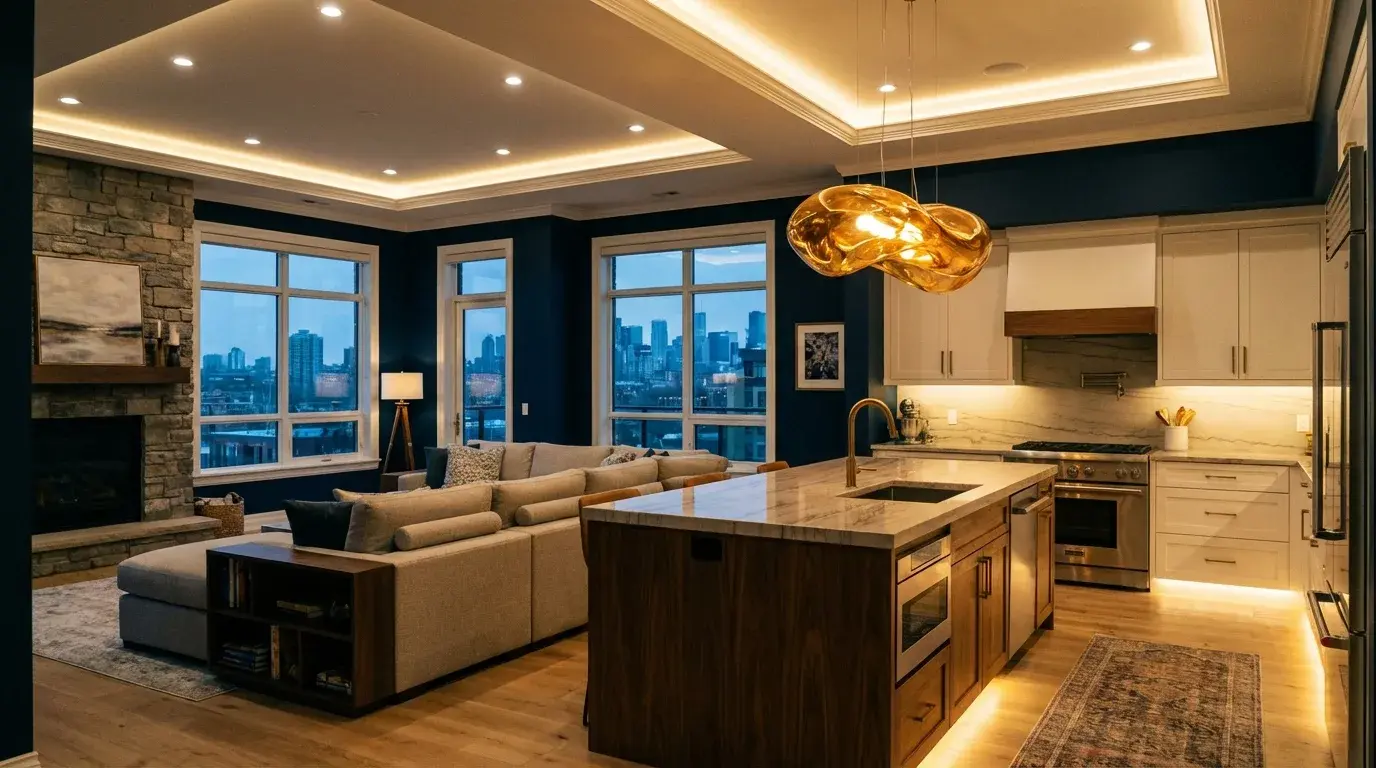
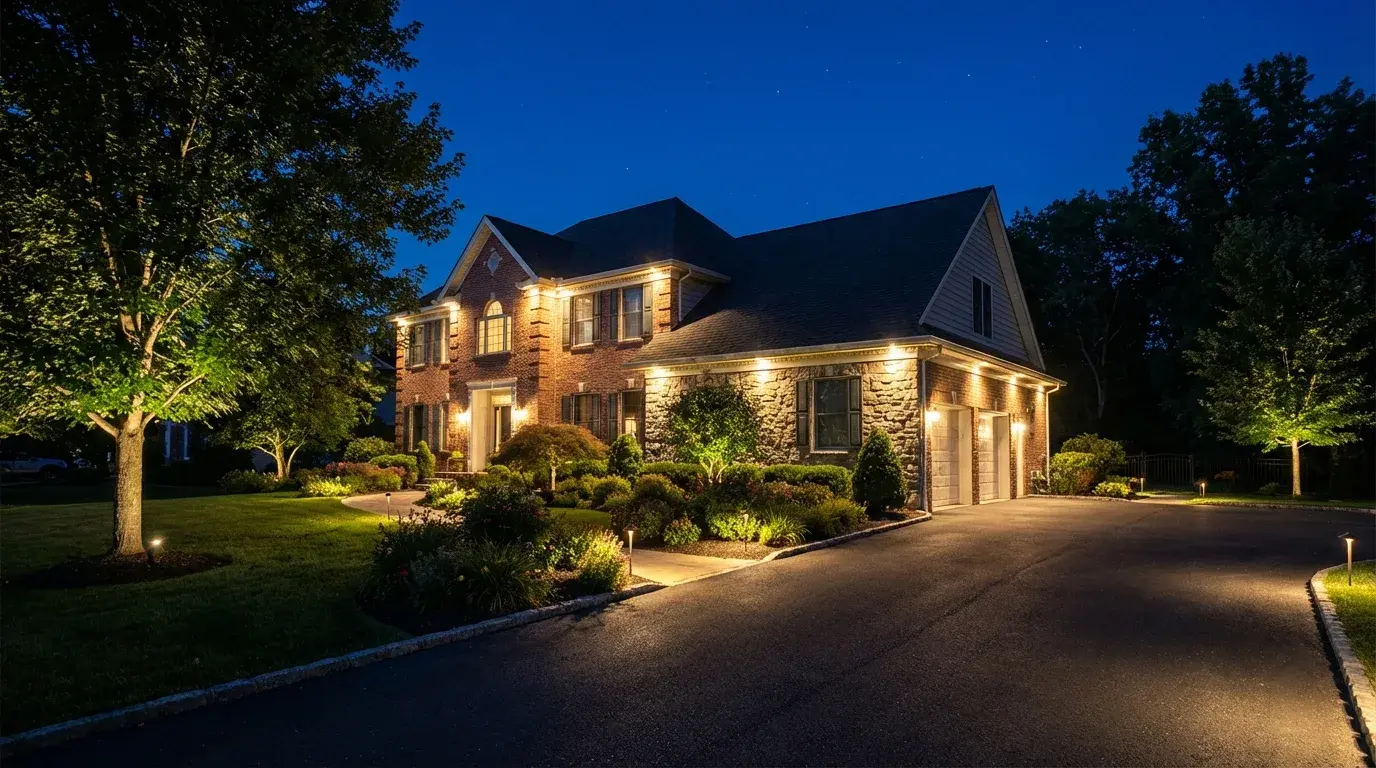
Documented before/after sliders for panel upgrades, EV chargers, and generators live on our portfolio page. Lighting job photos are being added as we collect homeowner permission.
Dimmers & smart switches
LED recessed lights only dim well when the dimmer and the driver are matched. We check the fixture's compatibility list before ordering, use an LED-rated dimmer sized for the load, and wire a neutral to the switch box so a smart switch can go in now or later.
Lutron Caseta and Leviton Decora Smart are what we install most often. Three-way and multi-location dimming needs the matching companion device — we spec it as part of the quote so you are not buying a second switch after the fact.
The NJ permit, handled
Adding a new branch circuit or extending wiring is electrical work under the New Jersey Uniform Construction Code, and it needs an electrical permit from your municipality. A one-for-one fixture swap on existing wiring generally does not.
We file the application, schedule the inspection, and meet the inspector. Jersey City's online portal typically issues in 3–5 business days; Hoboken and Bayonne are paper-based and run 5–10. The permit fee is in your quoted price.
How long it takes
- One room, 6–8 wafers, existing circuit: 4–6 hours
- Same room plus a new dedicated circuit: one full day
- Plaster and lath: add 2–3 hours for cutting and patching
- Whole floor of a rowhouse: 2–3 days, scheduled room by room
- Inspection sign-off: a few days after the work, lights usable throughout
Recessed Lighting FAQs
How much does recessed lighting cost to install in NJ?
The typical 2026 range in Hudson County is $150–$250 per can installed for 4" or 6" LED wafer lights in an existing drywall ceiling we can access, and $200–$350 per can where we have to fish wire through plaster and lath in an older rowhouse or brownstone. A standard room of 6–8 fixtures on one dimmer runs $1,500–$1,800 all in, which matches the figure published in our pricing guide. If the job needs a new dedicated circuit run back to the panel, add $350–$800 and an electrical permit. Every job gets a written price before we cut a single hole.
How many recessed lights do I need for a 12x14 room?
Six fixtures is the usual answer for a 12x14 room with an 8-foot ceiling. The quick method electricians use is to divide the ceiling height by two for spacing — an 8-foot ceiling gives roughly 4 feet between fixtures — which lays out as two rows of three, set about 2 to 2.5 feet off the walls. If the room is a kitchen with counters, or you want to wall-wash artwork, we may go to seven or eight and put them on a dimmer instead. We mark the ceiling with the proposed layout before drilling so you can see it first.
Can you add recessed lighting to a plaster ceiling?
Yes, and we do it constantly in Jersey City, Hoboken, and Union City rowhouses. Plaster over wood lath is more work than drywall: it is thicker, it cracks if you cut it dry with the wrong blade, and the lath strips have to be cut cleanly so the fixture clips still grab. We score and cut rather than punch, we fish wire along joist bays instead of opening long channels, and we plan the layout to avoid ceiling medallions and original moldings. Expect $200–$350 per can rather than the drywall rate, and expect a small amount of touch-up plaster and paint — we tell you upfront exactly where.
Do I need a permit for recessed lighting in New Jersey?
If we are adding a new branch circuit or extending wiring, yes — that is electrical work under the NJ Uniform Construction Code and requires an electrical permit from your municipality. Swapping an existing fixture one-for-one on existing wiring generally does not. Malfettone Electric files the permit application, schedules the inspection, and meets the inspector. You never visit the construction office.
What is the difference between a wafer light and a can housing?
A canned housing is the traditional metal can that mounts to the joist with the trim and bulb inside it; it needs about 6–8 inches of depth above the ceiling and, in an insulated ceiling, has to be IC-rated. An LED wafer is a thin disc — under an inch thick — with a small remote junction box that tucks into the ceiling cavity, so it fits where a housing never would: shallow bays, ductwork runs, low basements, and directly under a floor above. For most retrofit work in Hudson County we use wafers. For new construction, or where you want an adjustable trim to aim light at art or a fireplace, a real housing is still the better fixture.
How long does a recessed lighting installation take?
One room of 6–8 wafer lights on an existing circuit is typically a 4–6 hour day. Add a new dedicated circuit and it becomes a full day. A plaster-and-lath ceiling adds a few hours for careful cutting and patching, and if a room needs a permit inspection the sign-off is scheduled a few days after the work — the lights are live and usable in the meantime. Multi-room jobs we schedule room by room so you are never without lighting in the whole house.
Third-generation owner of Malfettone Electric, family-owned since 1977. Michael has laid out and installed recessed lighting in Jersey City brownstones, Hoboken rowhouses, and Bayonne two-families — cutting plaster, fishing joist bays, and pulling the UCC permits himself. The prices and timelines on this page come from our own 2026 jobs.
Thinking About Recessed Lighting?
Tell us the room. We'll come out, mark a layout on the ceiling, and hand you a written price before anything gets cut.