Outdoor Lighting Installation in Hoboken, NJ
Hoboken's outdoor space is the back of a rowhouse and the top of it. Narrow yards behind the building, shared fences on both sides, stoops on the street side, and — increasingly — a finished roof deck with a Manhattan view. Everything is close to a neighbor, which makes glare control as important as brightness.
By submitting, you agree to receive text messages from Malfettone Electric at the number provided, including those related to your inquiry, follow-ups, and review requests, via automated technology. Consent is not a condition of purchase. Msg & data rates may apply. Reply STOP to cancel or HELP for assistance.
Lighting Designed for the Space You Actually Have
Low-voltage is the default in a mile-square city of small yards: it is safer to run, does not require the same trenching depth, and a properly sized transformer on a timer handles the whole system. Line-voltage still belongs on the building — security floods, wall fixtures, and any exterior receptacle, all GFCI-protected with weatherproof in-use covers. Roof decks need wind-rated fixtures and a clean conduit run up through the building.
We walk the property at dusk before quoting — that is when you can actually see where light is missing and where it would glare. Fixture placement, wiring runs, and the transformer location all get settled before anybody digs. See our full outdoor lighting services →
Low-voltage vs line-voltage
Low-voltage (12V) runs off a transformer fed from a GFCI-protected outdoor receptacle. It is safer to install and to live with, the cable does not need the same burial depth, and moving or adding a fixture later is straightforward. That makes it the right answer for nearly everything in the landscape: path lights, uplights, well lights, step lighting.
Line-voltage (120V) stays for what mounts on the building — security floods, wall fixtures, post lanterns, and any exterior receptacle. It needs conduit or direct-burial cable at proper depth, weatherproof boxes, and a permit when the circuit is new. Most properties end up with a sensible mix of the two.
Timers & smart control
A system you have to remember to switch on stops getting used. A photocell brings everything on at dusk. An astronomic timer adds a shut-off hour that shifts with the season, so nothing is lit at 3 a.m. for no reason.
Smart controllers add zones and phone control — path and security lighting running all night while accent lighting shuts off at midnight, plus a vacation schedule. We set the schedule with you on install day rather than leaving you an app and a manual.
GFCI & outdoor code
Outdoor receptacles require GFCI protection under NEC 210.8, and NEC 406 requires weather-resistant devices with a weatherproof in-use cover — the bubble cover that stays closed over a plugged-in cord. It is the first thing an inspector checks.
Outdoor Lighting Work in Hoboken and Nearby
Low glare, even coverage, and weatherproof from the transformer to the last fixture. We walk the property at dusk before quoting.
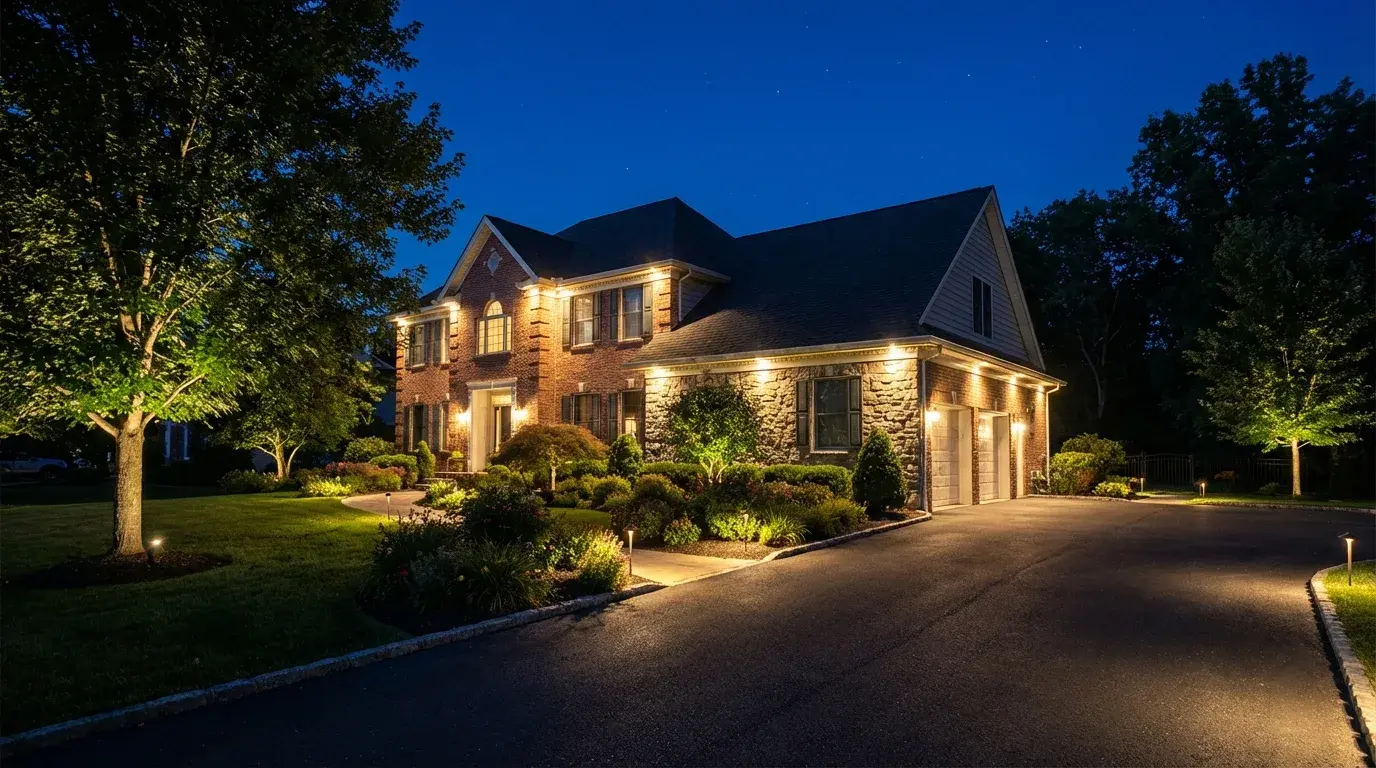
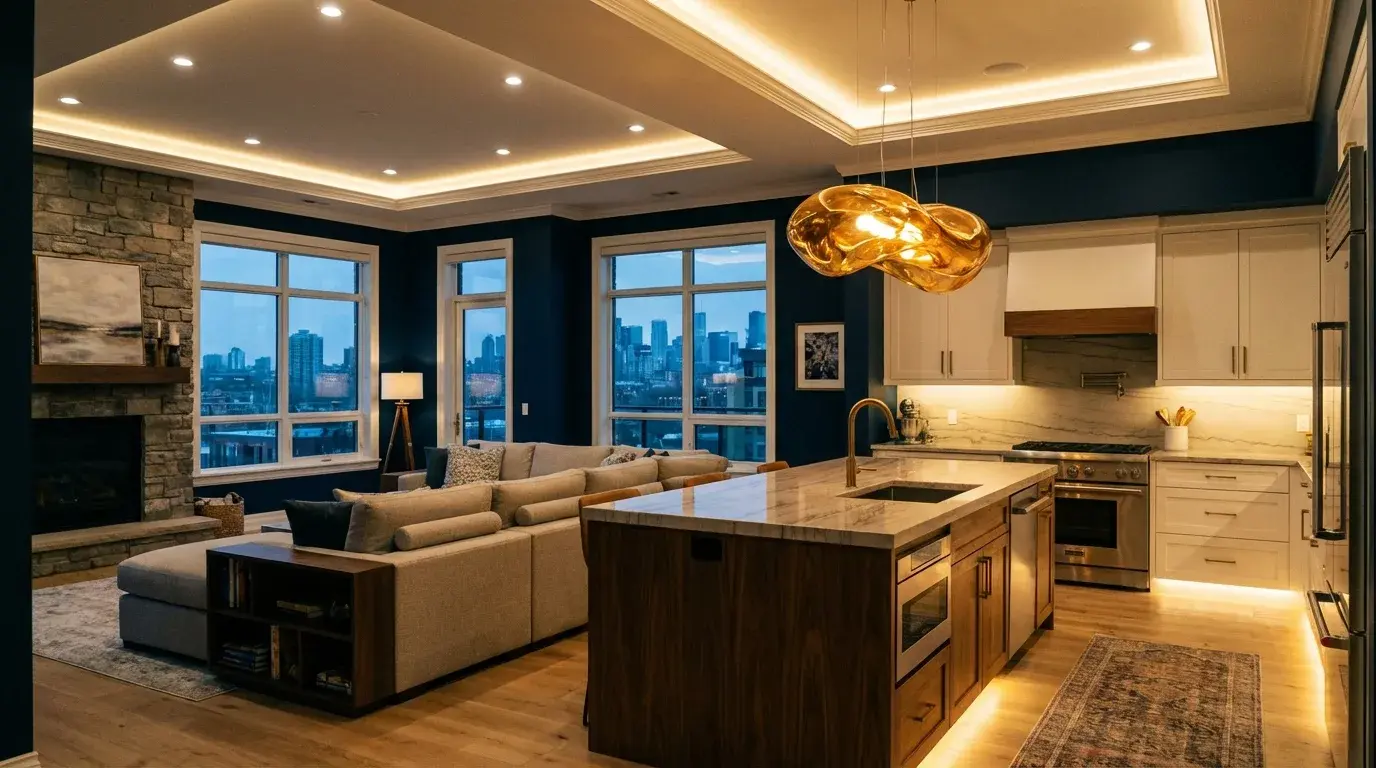
Documented before/after sliders for panel upgrades, EV chargers, and generators live on our portfolio page. Lighting job photos are being added as we collect homeowner permission.
The Hoboken permit process — we handle it
Hoboken permits electrical work through the Building Department on Washington Street, still filed in person — expect 5–10 business days for a new outdoor circuit or receptacle. Fixture replacement on existing wiring generally needs no permit. Condo and co-op boards frequently require approval for anything on a roof or a façade; we get the scope and certificate of insurance to management before we schedule.
Outdoor Lighting FAQs — Hoboken, NJ
What does outdoor lighting cost in Hoboken?
A single security floodlight on an existing circuit is typically $150–$350 installed. A low-voltage backyard or roof-deck system with a transformer, timer, and six to ten fixtures generally runs $800–$3,000 depending on fixture count and how the wiring gets to the space. A new GFCI-protected exterior circuit adds cost and requires a permit. Everything is quoted in writing first.
Do I need board approval for roof deck lighting in Hoboken?
In a condo or co-op, almost always. Boards typically want the scope, a certificate of insurance, and often the permit number before work starts, and many restrict work hours or roof access. We send that package to your management company ahead of scheduling so the approval and the install line up rather than stalling each other.
Are outdoor receptacles required to be GFCI protected?
Yes. NEC 210.8 requires GFCI protection for receptacles in outdoor and other wet or damp locations, and NEC 406 requires weather-resistant devices with a weatherproof in-use cover outdoors — the bubble cover that keeps the plug protected while something is plugged in. It is the first thing an inspector looks at, and it is what keeps a wet cord from becoming a shock hazard.
Low-voltage or line-voltage for a Hoboken backyard?
Low-voltage for nearly everything in the yard. A 12-volt system run off a properly sized transformer is safer to install and to live with, the cable does not need the same burial depth, and adding or moving a fixture later is simple. Line-voltage stays for what mounts on the building: security floods, wall fixtures, and exterior receptacles. Most jobs here end up as a mix of both.
Third-generation owner of Malfettone Electric, family-owned since 1977. Michael has laid out landscape and security lighting across Hudson Countyhimself — walking the property at dusk, setting the transformer, pulling the UCC permits, and meeting the inspectors. The prices and timelines on this page come from our own recent jobs.
Outdoor Lighting Across Hudson & Essex County
Ready to Light the Outside of Your Hoboken Home?
We'll walk the property at dusk, show you where the light should land, and put the price in writing before any digging starts.